Warm compresses + lid hygiene: eye care's "gold standard" first step
Why eye doctors so often start with warmth and eyelid cleansing for dry, irritated eyes, what the research says, and how to make the two-step routine easy to keep.
If your eyes often feel dry, gritty or tired, and you ask an eye doctor what to do first, the answer is usually the same: warmth and clean eyelids. Warm compresses plus eyelid hygiene have been recommended for decades and appear at the start of the major international dry eye guidelines. It is the closest thing eye care has to a "gold standard" first step. Here is why.
It starts in your eyelids
Every time you blink, a thin layer of tears spreads over your eyes. The top layer of that tear film is oil, made by the meibomian glands, tiny glands that line the edges of your upper and lower eyelids. That oil slows evaporation and keeps your tears from drying out too fast.
When those oils thicken and the gland openings become blocked, a condition called meibomian gland dysfunction (MGD), less oil reaches your tears and they evaporate faster. International expert reports identify MGD as a leading cause of dry eye [1, 2]. Eyes can feel dry, gritty, tired or irritated, and sometimes even watery.
Step 1: Warmth
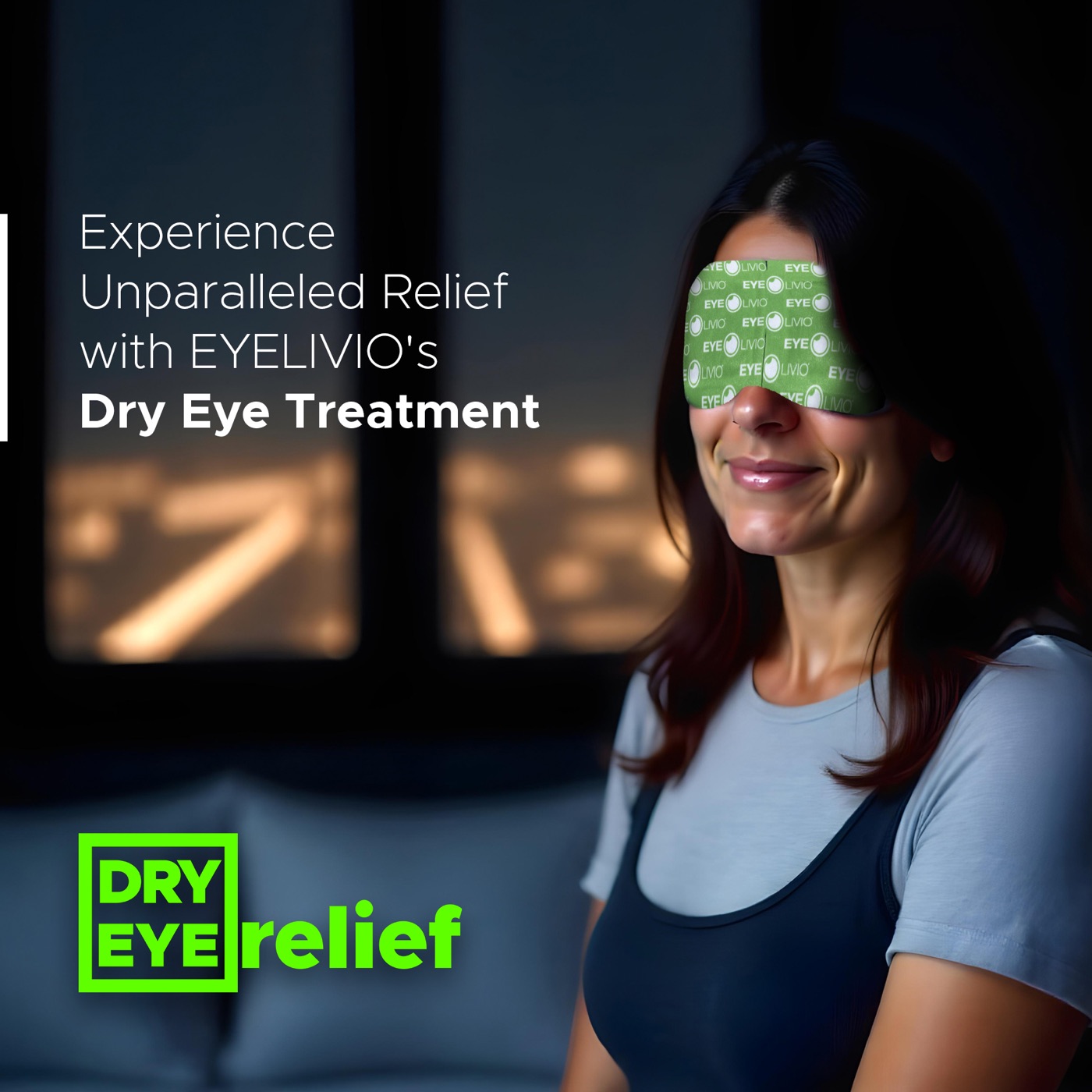
Thickened oils soften when the eyelids are warmed. Gentle, steady warmth on closed eyelids helps those oils flow again so they can reach the tear film. Studies have measured a thicker oil layer in the tear film after warm compresses in people with MGD [3].
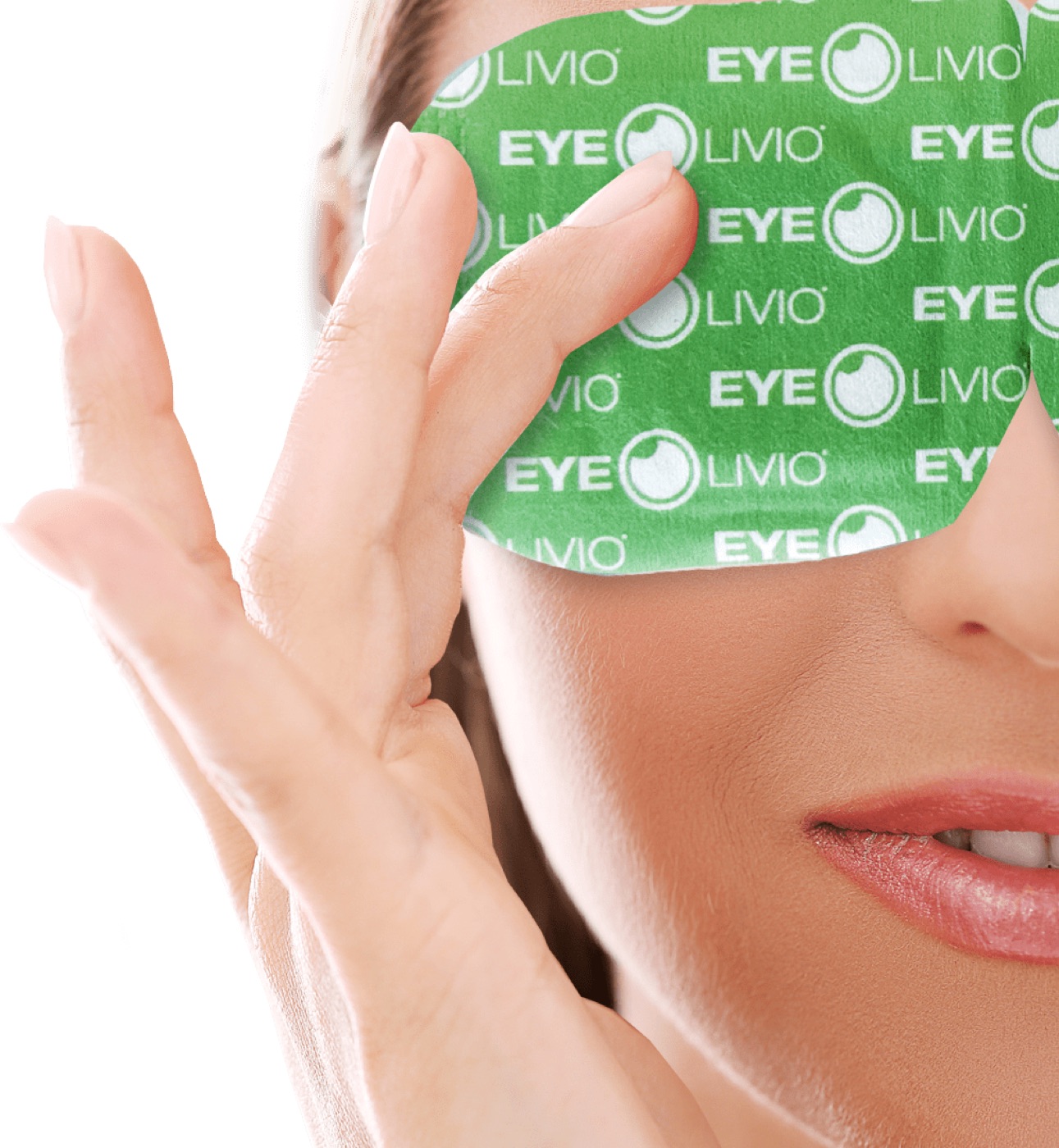
How the warmth is applied matters. Research shows that the method changes how much warmth actually reaches the inner surface of the eyelid, where the glands are [4]. A washcloth cools down within a minute or two, so it delivers less than something that holds a steady temperature. That is one reason self-warming masks and other eyelid warmers have been studied as an alternative to a towel [5].
The international MGD workshop recommended warming the eyelids for at least four minutes, once or twice a day, as part of eyelid hygiene [1].
Step 2: Clean eyelids
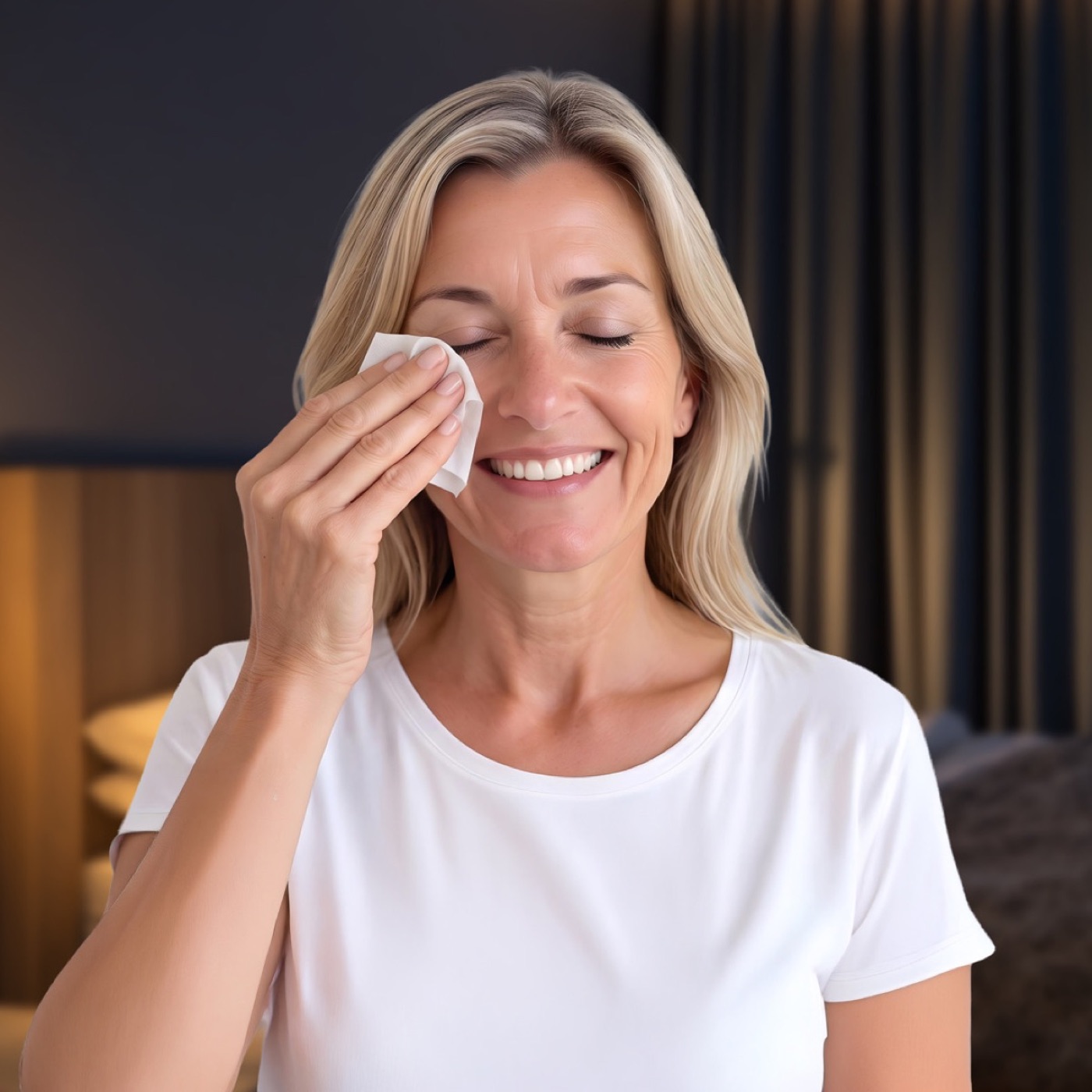
Warmth loosens; cleansing clears. Gently cleaning the edges of the eyelids removes oils, debris, crusts and buildup at the base of the lashes so the gland openings stay clear. Today this is often done with ready-to-use eyelid wipes instead of diluted baby shampoo or homemade solutions [6].
A Cochrane review of eyelid hygiene for chronic blepharitis (long-lasting eyelid inflammation) found that warm compresses and lid scrubs improved symptoms for some people. It also noted that nothing makes the problem go away for good, which is why eyelid care is meant to be a daily habit [7].
Why the two belong together
The two steps work as a pair. The international MGD workshop calls eyelid hygiene, warmth combined with gentle cleansing, "the mainstay of the clinical treatment of MGD," with near-unanimous support among international experts [1]. The TFOS DEWS II report places eyelid hygiene and warm compresses in its first step of dry eye management [2], and its 2025 update (TFOS DEWS III) again lists warm compresses and eyelid hygiene, including eyelid wipes, among the core approaches for eyelid-related dry eye [6]. The American Academy of Ophthalmology also recommends warm compresses and eyelid cleansing as part of initial and ongoing care for blepharitis [8].
- Warm first: to soften the oils inside the glands.
- Then cleanse: to clear the eyelid edges and lashes.
- Repeat daily: eyelid care works best as a habit, not a one-time fix.
The real challenge: doing it every day
The routine is simple on paper but easy to skip in real life. In one study of people asked to use warm compresses and lid scrubs, only 55% were still following the routine six weeks later; most of those who kept it up said their symptoms were completely or partly better [9]. Reheating towels, mixing solutions and finding the time are real obstacles.
Making the routine easier
That is the idea behind the EYELIVIO Cleanse & Warm Kit, coming in January 2027: keep the two-step routine eye doctors already recommend, and take the hassle out of it. The kit pairs LidWipes, individually wrapped, fragrance-free eyelid cleansing wipes, with self-warming eye masks that warm up on their own, with no microwave. Two steps, one box, made to fit into your day.
Want to know when it is ready? Join the waitlist.
This article is for general information only and is not medical advice. EYELIVIO self-warming masks and LidWipes are personal care products and are not intended to diagnose, treat, cure or prevent any disease. Talk to your eye doctor about your symptoms.
Sources
- Geerling G, Tauber J, Baudouin C, et al. The International Workshop on Meibomian Gland Dysfunction: Report of the Subcommittee on Management and Treatment of Meibomian Gland Dysfunction. Invest Ophthalmol Vis Sci. 2011;52(4):2050–2064. doi:10.1167/iovs.10-6997g
- Jones L, Downie LE, Korb D, et al. TFOS DEWS II Management and Therapy Report. Ocul Surf. 2017;15(3):575–628. doi:10.1016/j.jtos.2017.05.006
- Olson MC, Korb DR, Greiner JV. Increase in tear film lipid layer thickness following treatment with warm compresses in patients with meibomian gland dysfunction. Eye Contact Lens. 2003;29(2):96–99.
- Blackie CA, Solomon JD, Greiner JV, Holmes M, Korb DR. Inner eyelid surface temperature as a function of warm compress methodology. Optom Vis Sci. 2008;85(8):675–683. doi:10.1097/OPX.0b013e318181adef
- Arita R, Morishige N, Shirakawa R, Sato Y, Amano S. Effects of eyelid warming devices on tear film parameters in normal subjects and patients with meibomian gland dysfunction. Ocul Surf. 2015;13(4):321–330. doi:10.1016/j.jtos.2015.04.005
- Jones L, Craig JP, Markoulli M, et al. TFOS DEWS III Management and Therapy Report. Am J Ophthalmol. 2025. doi:10.1016/j.ajo.2025.05.039
- Lindsley K, Matsumura S, Hatef E, Akpek EK. Interventions for chronic blepharitis. Cochrane Database Syst Rev. 2012;(5):CD005556. doi:10.1002/14651858.CD005556.pub2
- Lin A, Ahmad S, Amescua G, et al. Blepharitis Preferred Practice Pattern®. Ophthalmology. 2024;131(4):P50–P86. American Academy of Ophthalmology.
- Alghamdi YA, Camp A, Feuer W, Karp CL, Wellik S, Galor A. Compliance and subjective patient responses to eyelid hygiene. Eye Contact Lens. 2017;43(4):213–217.
This article is for general information only and is not medical advice. Talk to your eye doctor about your symptoms and before starting any new routine.