Heat's On, Eyes Dry? Why Dry Eye Feels Worse in Fall and Winter
Indoor heating, dry outdoor air and long evenings on screens can leave eyes feeling dry and tired in the colder months. Here is why it happens and a simple routine to keep your eyes comfortable all season.

If your eyes feel drier, grittier or more tired once the weather turns cold, you are not imagining it. Dry eye symptoms tend to rise in fall and winter, mostly because of the air around us: heated indoor air is very dry, and dry air pulls moisture from the surface of your eyes faster. The good news is that a few small changes at home, plus a calm bedtime routine, can make the colder months much more comfortable.
Why cold weather and dry eyes go together
Researchers who looked at 3.4 million visits to U.S. Veterans Affairs eye clinics found that dry eye diagnoses rise in winter and spring and are lowest in summer [1]. They suggested that dry indoor air from heating may explain part of the winter rise. Several things change at once when the temperature drops.
Heating dries the air
Cold outdoor air holds very little moisture. When that air is warmed by a furnace, a space heater or a fireplace, its relative humidity drops even further, often far below what feels comfortable. Your tear film, the thin layer of moisture that covers each eye, evaporates faster in that kind of air.
In a laboratory study, people sat in a room with very low humidity and then in a room with normal humidity. In the dry room, their tears evaporated faster and the protective oil layer of the tear film became thinner [2]. A large international review of environmental conditions and the eye reached the same conclusion: low humidity is one of the most common triggers of eye dryness and discomfort [3].
Wind and cold outside
Outside, cold wind speeds up evaporation in the same way. Going back and forth between cold, windy streets and warm, dry rooms all day can leave eyes feeling tired by evening.
More screen time, fewer blinks
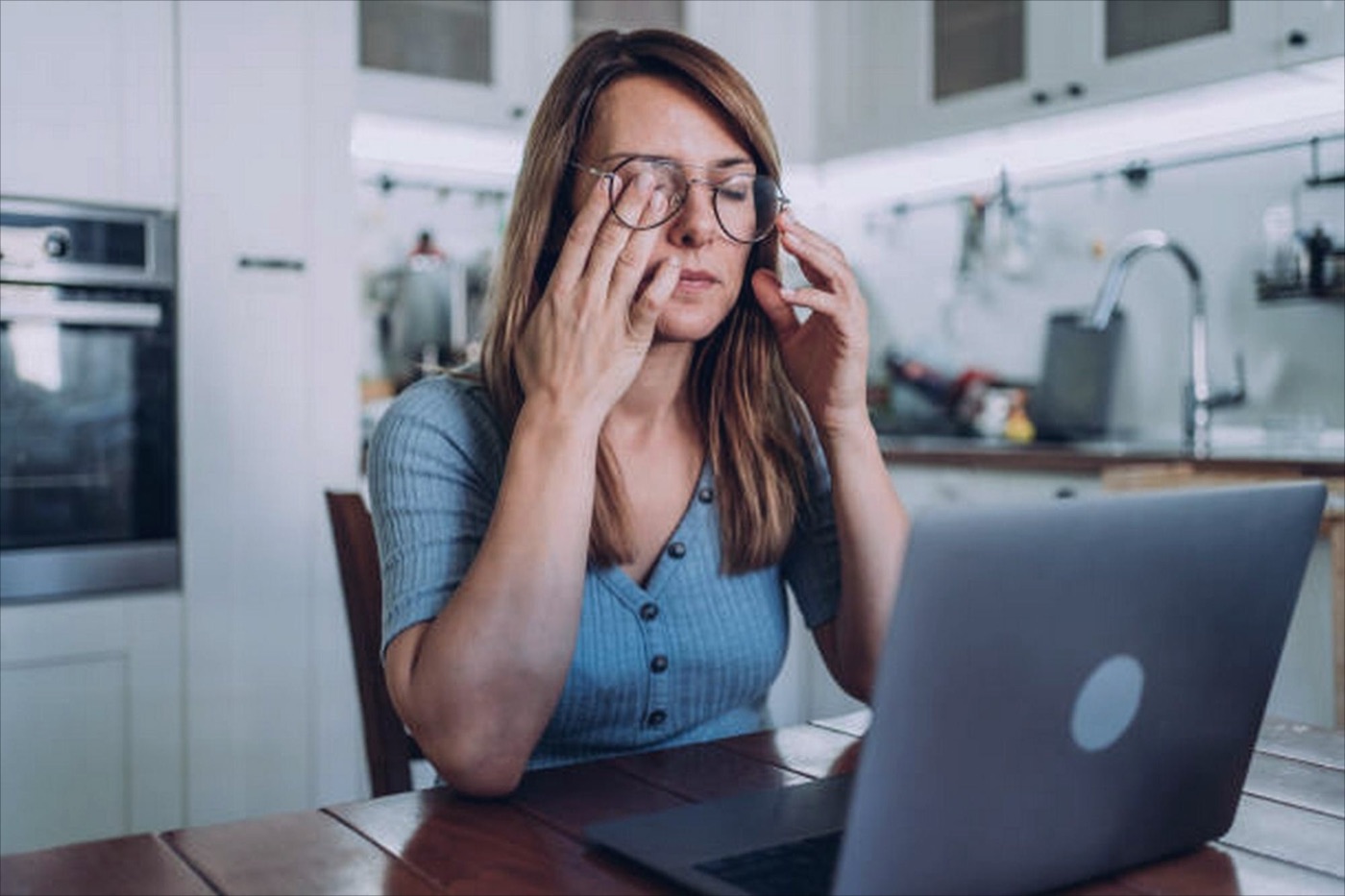
Shorter days mean more time indoors and on phones, tablets, computers and TV. When we focus on a screen, we tend to blink less often and less completely, so the tear film is refreshed less often [4]. Put that together with dry heated air and the result is very familiar: eyes that feel fine in the morning and dry, heavy or scratchy by bedtime.
How to tell if the season is affecting your eyes
Seasonal eye dryness usually feels like:
- dryness, grittiness or a "sandy" feeling
- burning or stinging, especially later in the day
- eyes that feel tired or heavy in the evening
- watery eyes, which can happen when the eye reacts to dryness
- discomfort that is worse in heated rooms, cars or on airplanes
See an eye doctor if you have eye pain, changes in your vision, a lot of redness, or symptoms that get worse or don't go away. Dryness can have many causes, and an eye exam is the best way to know what is behind yours.
6 easy ways to protect your eyes this season
- Add moisture to the air. A humidifier in the bedroom or home office can make heated air feel less harsh. Keep it clean according to the manufacturer's instructions.
- Point the air away from your face. Aim car vents, space heaters and ceiling vents away from your eyes, especially while you drive or sleep.
- Take screen breaks. Every 20 minutes, look at something about 20 feet away for 20 seconds, and blink fully a few times.
- Shield your eyes outside. Wraparound sunglasses or glasses help block cold wind.
- Drink water. Heated rooms dry out more than just your eyes.
- Give your eyes a calm bedtime routine. Evening is when eyes often feel most tired, so it is a good time for a few minutes of care.
A simple bedtime routine for the colder months
Many people find it easier to stick with a routine that fits into the time they are already winding down for bed. Here is one that takes about 15 minutes.
- Warmth. Rest a warm compress over your closed eyes for 10–15 minutes. Gentle, steady warmth is soothing for tired eyes, and eye care experts recommend warmth as part of everyday eyelid care [5]. A washcloth cools within a minute or two, so a self-warming mask that stays warm is easier.
- Overnight moisture. Eye ointments are thicker than drops and stay on the eye longer, which is why they are usually used at bedtime, when blurry vision doesn't matter [6].
- Sleep. Keep the bedroom air moist and the heat vent pointed away from your bed.
How EYELIVIO fits in
The EYELIVIO Complete Dry Eye Care Pack was made for exactly this kind of evening routine. It includes:
- 7 self-warming eye masks that start warming on their own about 30 seconds after you open the pouch. No microwave, no cord, and nothing to reheat.
- A preservative-free nighttime lubricant eye ointment (5 g) that keeps eyes moisturized while you sleep.
Open a mask, apply a small amount of ointment inside your lower eyelid, then rest the warm mask over your closed eyes for 10–15 minutes before sleep. The masks are individually wrapped, so they also travel well for holiday trips.
If you want warmth on more nights, the Self-Warming Eye Masks come in 10 and 30 packs. You can also Subscribe & Save 15% so a new pack arrives every 1, 2 or 3 months, all winter long.
Want to learn more? Read Nighttime dry eye: why it happens and Dry eye discomfort from screen use.
Quick answers
Why are my eyes drier in winter? Cold outdoor air and heated indoor air are both very dry. Dry air makes the tear film evaporate faster, so eyes can feel dry, gritty or tired.
Does a humidifier help dry eyes? Adding moisture to the air can make a heated room feel more comfortable and slows the drying of the tear film. It works best together with other good habits, like screen breaks and a bedtime routine.
When should I use an eye ointment? Usually at bedtime. Ointments are thicker than drops and can blur vision for a short time, so most people use them right before sleep. Always follow the directions on the package.
Can I use a self-warming mask every night? Yes. EYELIVIO self-warming masks are single-use, so you use one new mask each night. Follow the directions on the pouch.
This article is for general information only and is not medical advice. EYELIVIO self-warming masks are personal care products and are not intended to diagnose, treat, cure or prevent any disease. Read all directions and warnings on the package, and talk to your eye doctor about your symptoms.
Sources
- Kumar N, Feuer W, Lanza NL, Galor A. Seasonal variation in dry eye. Ophthalmology. 2015;122(8):1727–1729. doi:10.1016/j.ophtha.2015.02.013
- Abusharha AA, Pearce EI. The effect of low humidity on the human tear film. Cornea. 2013;32(4):429–434. doi:10.1097/ICO.0b013e31826671ab
- Alves M, Asbell P, Dogru M, et al. TFOS Lifestyle Report: Impact of environmental conditions on the ocular surface. Ocul Surf. 2023;29:1–52. doi:10.1016/j.jtos.2023.04.007
- Wolffsohn JS, Lingham G, Downie LE, et al. TFOS Lifestyle: Impact of the digital environment on the ocular surface. Ocul Surf. 2023;28:213–252. doi:10.1016/j.jtos.2023.04.004
- Geerling G, Tauber J, Baudouin C, et al. The International Workshop on Meibomian Gland Dysfunction: Report of the Subcommittee on Management and Treatment of Meibomian Gland Dysfunction. Invest Ophthalmol Vis Sci. 2011;52(4):2050–2064. doi:10.1167/iovs.10-6997g
- Jones L, Downie LE, Korb D, et al. TFOS DEWS II Management and Therapy Report. Ocul Surf. 2017;15(3):575–628. doi:10.1016/j.jtos.2017.05.006
This article is for general information only and is not medical advice. Talk to your eye doctor about your symptoms and before starting any new routine.