Flying for the Holidays? How to Keep Your Eyes Comfortable on the Plane
Dry cabin air, long hours on screens and sleeping upright can leave eyes feeling dry and tired after a flight. Here is why it happens and simple tips for before, during and after your trip.
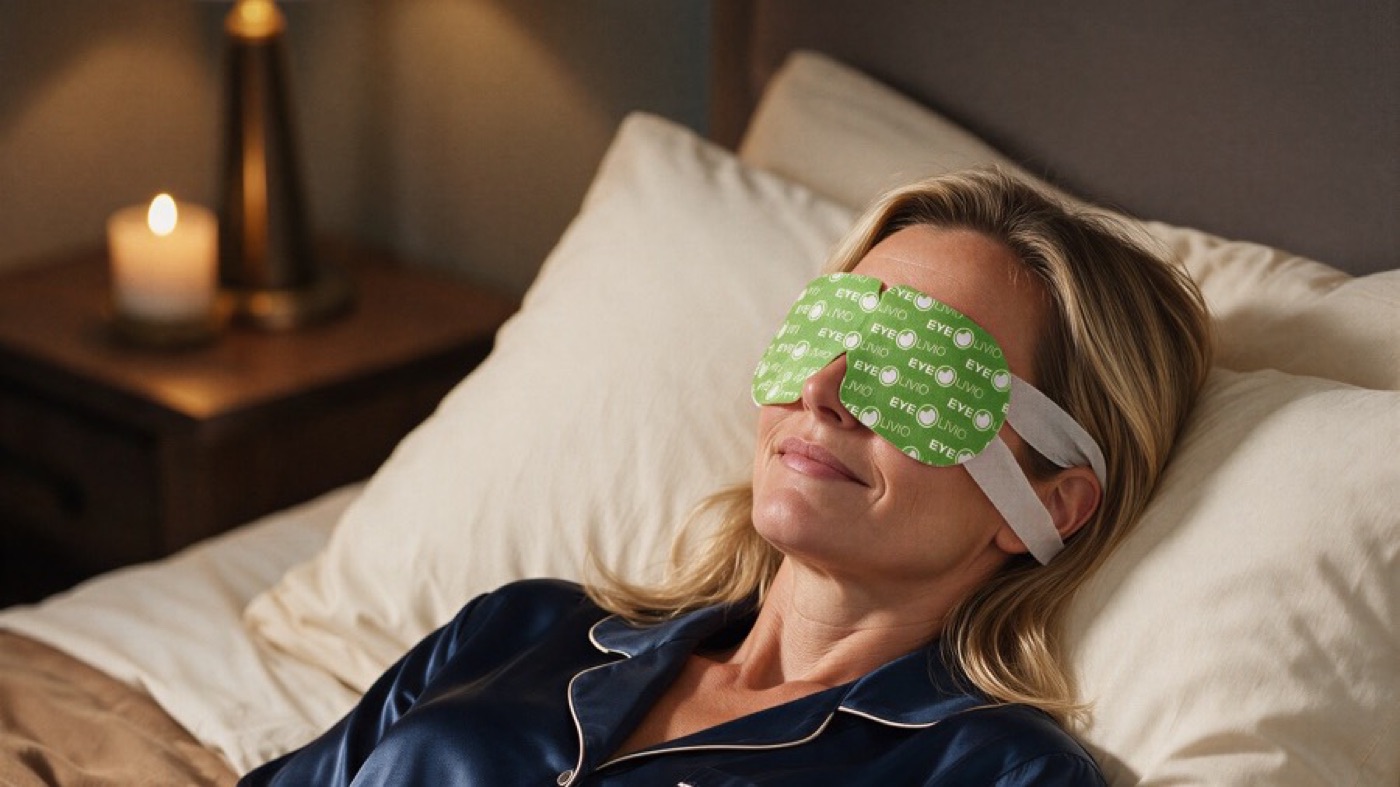
If your eyes feel dry, scratchy or tired after a flight, you are not alone. The air inside an airplane cabin is very dry, usually only 10–20% humidity [1], and dry air makes the moisture on the surface of your eyes evaporate faster. Add hours of movies or phone scrolling and a short, upright nap, and many people land with eyes that feel heavy and uncomfortable. A little planning before you fly, a few habits on board and some gentle warmth when you land can make holiday travel much easier on your eyes.
Why flying dries out your eyes
Your eyes are covered by a thin layer of moisture called the tear film. Anything that speeds up its evaporation can make your eyes feel dry. On a plane, several things happen at the same time.
The cabin air is very dry
Air at cruising altitude holds almost no water, so the air that circulates through the cabin is much drier than the air in most homes. The CDC notes that cabin air is usually only 10–20% humidity and that this can dry the eyes and airways [1].
In a laboratory study, researchers measured tear evaporation at 20–25% humidity, similar to an airplane cabin, and at 40–45% humidity, similar to normal indoor air. In the drier air, tears evaporated about twice as fast, in people with dry eye and in people without it [2].
Long hours, and more of them
The longer you are in that air, the more it adds up. In a survey of more than 1,200 airline pilots, about 7 in 10 said their eyes felt dry during flights, while only about 1 in 20 had dry eyes away from flying. Pilots who flew more hours each week were more likely to notice it [3]. Passengers on a long holiday trip spend fewer hours in the air, but the same dry cabin is at work.
Screens mean fewer blinks
Movies on the seat-back screen, a tablet, a laptop or your phone all keep your eyes busy. When we focus on a screen, we tend to blink less often and less completely, so the tear film is refreshed less often [4].
Sleeping upright
Overnight flights often mean a short, uncomfortable sleep in a bright, noisy cabin with air vents blowing nearby. Many people wake up with eyes that feel dry and tired.
Before you fly
- Pack eye comfort items in your carry-on, not your checked bag. You want them with you in the cabin. Liquids in your carry-on, like eye drops, need to follow your airline's and the TSA's rules.
- Wear glasses on long flights if you use contact lenses. Dry air can make lenses feel less comfortable. If you sleep on the plane, take your lenses out first unless your eye care provider has told you otherwise [5].
- Drink water. Dry cabin air affects more than your eyes, so start your trip well hydrated.
- Bring a sleep mask and a light scarf for overnight flights. Blocking the light helps you rest.
On the plane
- Point the air vent away from your face. A stream of dry air on your eyes speeds up evaporation. Turn it toward your body or close it.
- Take screen breaks. Every 20 minutes, look away from the screen at something far away for 20 seconds, and blink fully a few times.
- Blink on purpose. Gently close your eyes for a few seconds now and then, especially during a movie.
- Keep drinking water during the flight.
- Rest your eyes. Close them for a few minutes with a sleep mask, even if you don't fall asleep.
See an eye doctor if you have eye pain, changes in your vision, a lot of redness, or symptoms that get worse or don't go away after your trip. Dryness can have many causes, and an eye exam is the best way to know what is behind yours.
After you land: give your eyes some warmth
Evening is when tired eyes usually feel their worst, and that is even more true after a long travel day. A few minutes of gentle warmth over closed eyes is a calm way to end it. Eye care experts recommend warmth as part of everyday eyelid care [6].
- Find a quiet spot: your hotel room, a family guest room or your own bed.
- Rest a warm compress over your closed eyes for 10–15 minutes.
- Keep the bedroom air comfortable. Hotel heating and air conditioning can be very dry, so point vents away from the bed.
A hot washcloth is hard to manage when you're away from home, and it cools within a minute or two. A self-warming mask is easier to travel with.
How EYELIVIO fits in
EYELIVIO Self-Warming Eye Masks were made to go wherever you go:
- No microwave, no cord, nothing to plug in. The mask starts warming on its own about 30 seconds after you open the pouch.
- Individually wrapped, so they slip easily into a carry-on, a purse or a coat pocket.
- Up to about 20 minutes of gentle, soothing warmth, enough for a 10–15 minute rest.
- Soft ear loops keep the mask in place while you relax.
Open a pouch, wait about 30 seconds, hook the loops behind your ears with your eyes closed, and relax for 10–15 minutes. Then remove and discard the mask. Use it while you are awake and relaxing, and use a regular sleep mask for longer naps.
The Self-Warming Eye Masks · 10 Pack is the right size for a holiday trip. If you also want overnight moisture, the Complete Dry Eye Care Pack adds a preservative-free nighttime lubricant eye ointment to 7 masks.
Want to learn more? Read Heat's on, eyes dry? and Dry eye discomfort from screen use.
Quick answers
Why do my eyes feel dry after flying? Airplane cabin air is very dry, usually 10–20% humidity. Dry air makes the tear film evaporate faster, and long hours on screens mean fewer blinks.
Can I bring self-warming masks on a plane? The TSA lists air-activated hand warmers as allowed in carry-on and checked bags [7]. EYELIVIO masks warm the same way, by contact with air, and need no battery or flame. The TSA officer makes the final decision at the checkpoint, so check the TSA and your airline's rules before you fly.
Can I use a self-warming mask during the flight? You can use it while you are awake and resting in your seat. Set a timer for 10–15 minutes, then remove the mask. Many people prefer to use it after landing, when they can fully relax.
Should I take out my contact lenses on a long flight? Many people find glasses more comfortable in dry cabin air. If you plan to sleep, remove your lenses first unless your eye care provider has told you otherwise [5].
This article is for general information only and is not medical advice. EYELIVIO self-warming masks are personal care products and are not intended to diagnose, treat, cure or prevent any disease. Read all directions and warnings on the package, and talk to your eye doctor about your symptoms.
Sources
- Mase SR, Gearhart SL, Nardell EA, Brown CM. Air Travel. In: CDC Yellow Book 2026: Health Information for International Travel. Centers for Disease Control and Prevention. https://www.cdc.gov/yellow-book/hcp/travel-air-sea/air-travel.html
- Uchiyama E, Aronowicz JD, Butovich IA, McCulley JP. Increased evaporative rates in laboratory testing conditions simulating airplane cabin relative humidity: an important factor for dry eye syndrome. Eye Contact Lens. 2007;33(4):174–176. doi:10.1097/01.icl.0000252881.04636.5e
- McCarty DJ, McCarty CA. Survey of dry eye symptoms in Australian pilots. Clin Exp Ophthalmol. 2000;28(3):169–171. doi:10.1046/j.1442-9071.2000.00294.x
- Wolffsohn JS, Lingham G, Downie LE, et al. TFOS Lifestyle: Impact of the digital environment on the ocular surface. Ocul Surf. 2023;28:213–252. doi:10.1016/j.jtos.2023.04.004
- Centers for Disease Control and Prevention. Preventing Eye Infections When Wearing Contacts. https://www.cdc.gov/contact-lenses/prevention/index.html
- Geerling G, Tauber J, Baudouin C, et al. The International Workshop on Meibomian Gland Dysfunction: Report of the Subcommittee on Management and Treatment of Meibomian Gland Dysfunction. Invest Ophthalmol Vis Sci. 2011;52(4):2050–2064. doi:10.1167/iovs.10-6997g
- Transportation Security Administration. What Can I Bring? Hand Warmers. https://www.tsa.gov/travel/security-screening/whatcanibring/items/hand-warmers
This article is for general information only and is not medical advice. Talk to your eye doctor about your symptoms and before starting any new routine.